
Driverless Car Tech Now Powers Farms and Warehouses
Self-driving technology is no longer confined to highways and city streets. The same sensors, navigation systems, and AI algorithms that power autonomous cars are now transforming how farms grow food and how warehouses move products. These innovations promise to address labor shortages, boost efficiency, and create safer working environments across industries that form the backbone of the global economy. From tractors that plant crops with precision to robots that navigate crowded warehouse aisles, the principles of autonomous navigation are reshaping traditional work in surprising ways.
Autonomous vehicles in any setting rely on a core set of technologies that work together to perceive the environment, make decisions, and execute tasks without human intervention. GPS provides location data accurate within inches, while radar and sensors detect obstacles and map surroundings in real time. AI processes this information to determine optimal routes, adjust speed, and respond to changing conditions.
These same technologies adapt remarkably well to farms and warehouses because the fundamental challenges remain similar. Whether navigating a field or a storage facility, autonomous systems must avoid collisions, follow predetermined paths, and adapt to obstacles. The difference lies in the environment. Roads offer painted lines, traffic signals, and relatively predictable patterns. Fields have irregular terrain, variable soil conditions, and natural obstacles. Warehouses present narrow aisles, dynamic layouts, and constant human activity.
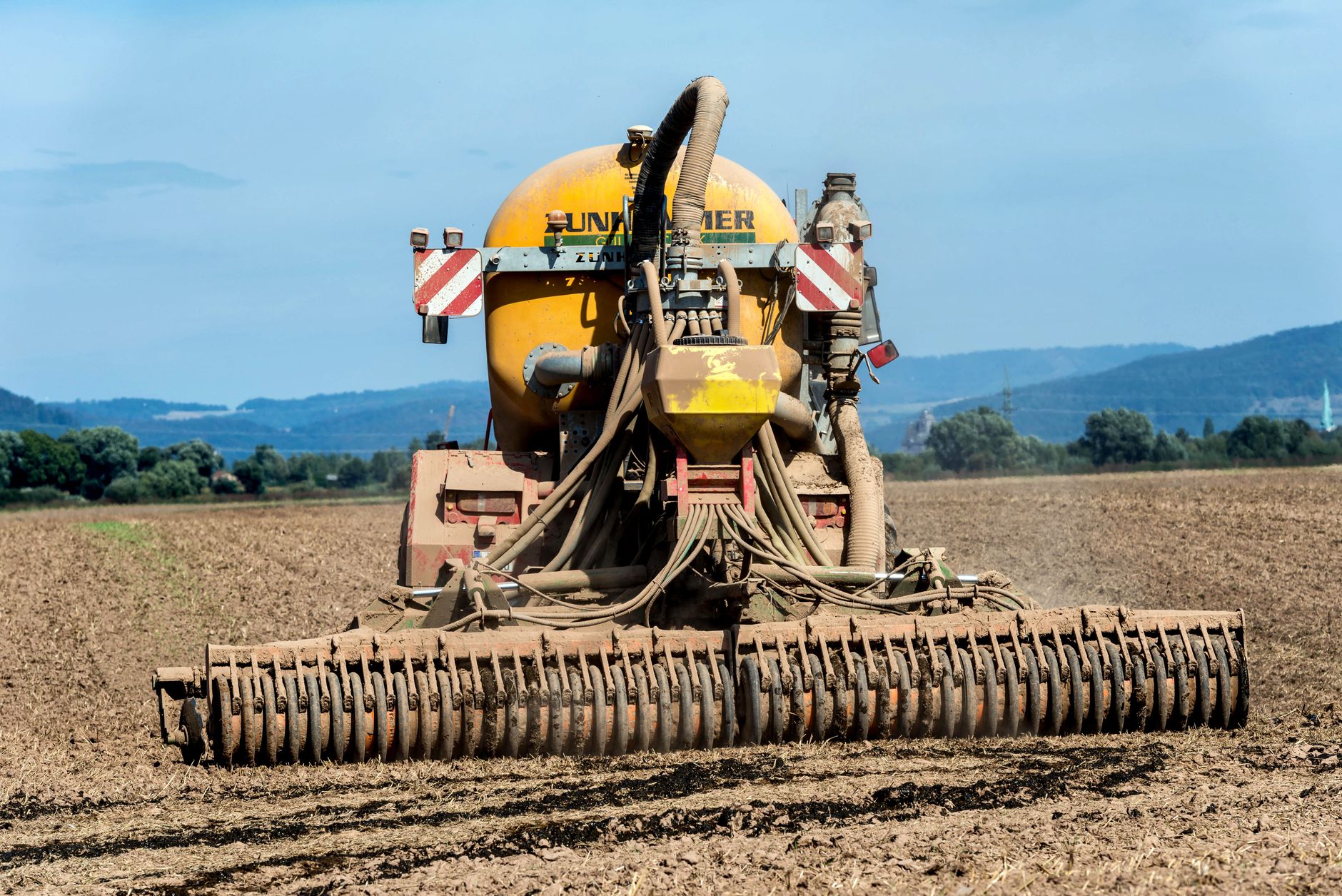
Modern autonomous tractors employ GPS, sensors, radar, and AI to navigate fields, manage speed, and avoid obstacles. These machines can work around the clock, unaffected by darkness or fatigue. The precision they offer reduces waste and environmental impact by applying seeds, water, and fertilizer only where needed. Agricultural equipment manufacturers have adapted automotive technology while developing unique solutions for off-road challenges that passenger cars never face.
Autonomous Vehicles Transform Agricultural Operations
The concept of driverless tractors dates back to 1940, but practical implementation only became viable with recent advances in computing power and sensor technology. Today’s autonomous farming equipment handles tasks that once required teams of workers and multiple passes across fields.
Autonomous vehicles in agriculture include not just tractors but also specialized implements for planting, targeted spraying, and monitoring crop health. Drones survey fields from above, identifying areas that need attention before problems become visible to the human eye. Ground-based robots can distinguish between crops and weeds, applying herbicides selectively to reduce chemical use.
The precision these systems achieve would be impossible for human operators to match consistently. A tractor guided by GPS can return to the exact same spot year after year, following coordinates rather than visible markers that may shift or disappear. This repeatability enables sophisticated crop rotation strategies and allows farmers to track yield variations down to specific sections of a field.
Labor availability represents one of the most pressing challenges in modern agriculture. Many farming operations struggle to find workers during critical planting and harvest windows. Autonomous equipment helps bridge this gap by operating continuously when conditions permit. A single farmer can oversee multiple machines working simultaneously, multiplying productivity without requiring additional labor.
Retrofit solutions now allow older tractors to gain autonomous capabilities. These systems install sensors and control mechanisms on existing equipment, extending the useful life of machinery that farmers already own and understand. This approach makes the technology accessible to operations that cannot justify the expense of purchasing entirely new fleets.
Warehouse Automation Through Mobile Robots
Warehouses face their own distinct challenges that autonomous technology addresses effectively. The explosive growth of online shopping has created demand for faster, more accurate order fulfillment. Traditional warehouse operations involve workers walking miles each day to collect items, a process that is slow, tiring, and prone to errors.
Autonomous Mobile Robots in warehouses leverage advanced vision sensors and machine learning to navigate dynamic spaces and find efficient routes. These robots share floor space with human workers, requiring sophisticated collision avoidance systems that go beyond what farm equipment needs. They must predict human movement patterns, recognize hand signals or gestures, and respond to sudden changes in traffic flow.
The robots learn warehouse layouts over time, optimizing their paths as they gain experience. When inventory locations change or new shelving units are added, the robots adapt without requiring manual reprogramming. This flexibility proves crucial in environments where layout modifications happen regularly to accommodate seasonal demand shifts or new product categories.
Safety improvements represent a major benefit of warehouse automation. The use of autonomous vehicles in warehouses helps improve efficiency, reduce human errors, and enhance safety by preventing collisions. Forklift accidents cause numerous injuries annually in traditional warehouses. Autonomous systems follow programmed safety protocols consistently, maintaining safe distances from people and structures. They never experience the momentary lapses in attention that lead to most workplace accidents.
Integration with inventory management systems allows these robots to update stock levels in real time as they move items. This eliminates the manual scanning steps that slow down traditional operations and introduce data entry errors. Warehouse managers gain accurate visibility into inventory status without conducting time-consuming physical counts.
While farms and warehouses benefit from similar autonomous technologies, each environment demands unique adaptations. Agricultural equipment must handle uneven ground, mud, rocks, and biological materials that would damage sensitive components. Dust-proofing and weather-resistance requirements exceed those of indoor warehouse robots by orders of magnitude.
Communication infrastructure differs substantially between the two settings. Warehouses typically offer robust WiFi networks that enable real-time coordination between multiple robots and central control systems. Farms often lack reliable connectivity across large acreage. Autonomous farm equipment must function independently for extended periods, making local decision-making capabilities more critical than constant cloud connectivity.
The regulatory landscape also varies. Road-going autonomous vehicles face extensive safety testing and certification requirements because they share space with the general public. Farm equipment operates on private land with fewer regulatory hurdles, allowing faster deployment of new technologies. Warehouse robots fall somewhere between these extremes, subject to workplace safety regulations but not vehicle traffic laws.
Cost structures influence adoption patterns differently across industries. Large-scale farming operations can justify substantial equipment investments because the technology scales efficiently across thousands of acres. Smaller farms may find the economics challenging unless they opt for retrofit solutions or equipment-sharing arrangements. Warehouses see faster returns on investment due to the direct labor costs they offset and the rapid payback periods that high-volume operations enable.
Summary
The migration of self-driving technology from highways to farms and warehouses demonstrates how foundational innovations find applications across diverse industries. GPS navigation, sensor arrays, and AI-driven decision-making solve different problems in each setting but rely on the same core principles. Agriculture gains precision and efficiency that address labor shortages while reducing environmental impact through targeted resource application. Warehouses achieve the speed and accuracy that modern commerce demands while creating safer working conditions.
These developments represent more than incremental improvements to existing processes. They enable entirely new operational models where human expertise focuses on strategy and oversight rather than repetitive manual tasks. As the technology matures and costs decline, adoption will likely accelerate beyond the early-adopting operations that currently lead implementation. The cross-pollination of ideas between automotive engineers and agricultural or logistics specialists continues to drive innovation in unexpected directions. What began as an effort to make cars safer and more convenient has evolved into a transformation of how essential goods move from soil to shelf.
FAQs
How do autonomous tractors handle obstacles in fields?
Autonomous tractors use multiple sensor types including radar, cameras, and ultrasonic sensors to detect obstacles. When an obstacle appears in their path, they can stop, route around it, or alert an operator depending on how they are programmed. Advanced systems distinguish between temporary obstacles like animals and permanent features like utility poles, responding appropriately to each situation.
Can existing farm equipment be converted to autonomous operation?
Yes, retrofit kits allow farmers to add autonomous capabilities to older tractors and implements. These systems install guidance computers, actuators to control steering, and sensor packages without replacing the entire machine. This approach costs significantly less than purchasing new autonomous equipment and lets farmers preserve their investment in existing machinery.
Do warehouse robots require special infrastructure?
Modern warehouse robots operate in existing facilities without major modifications. They use their sensors to map spaces and navigate around existing shelving, equipment, and people. Some operations add reflective markers or magnetic strips to optimize robot navigation, but these are enhancements rather than requirements. The robots primarily need adequate WiFi coverage and charging stations.
What happens if an autonomous farm vehicle loses GPS signal?
Most autonomous farm equipment is designed to handle GPS interruptions safely. When signal is lost, the machine typically stops and waits for signal restoration rather than continuing blindly. More advanced systems can maintain their course for short periods using inertial navigation that tracks movement from the last known position. Operators receive alerts when GPS issues occur.
How do autonomous systems handle coordination between multiple machines?
In warehouses, central management systems coordinate robot fleets to optimize traffic flow and prevent conflicts. Farms use different approaches depending on connectivity. When network coverage allows, multiple tractors can share field data and coordinate their patterns. In areas with poor connectivity, machines typically work in separate zones to avoid conflicts, with human operators managing the overall strategy.