How to Plan a Gallery Day in Rome: Expert Tips 2026
Rome holds some of the world’s most celebrated art collections, from ancient sculptures to Renaissance masterpieces and Baroque innovations. Planning a gallery day in the Eternal City requires more than enthusiasm – it demands strategy. The sheer volume of museums, churches, and archaeological sites can overwhelm even experienced travelers. Without advance planning, you risk spending hours in ticket queues, missing critical artworks, or exhausting yourself before you’ve seen what matters most. A well-structured gallery day balances ambition with realism, prioritizes your interests, and accounts for Rome’s unique art landscape where churches house masterpieces alongside formal museums.
Book Essential Venues Far in Advance
Rome’s most sought-after galleries require advance reservations, and some sell out weeks before your intended visit date. The Borghese Gallery enforces mandatory advance booking with strict time slots to preserve the intimate viewing experience. Tickets release months ahead and disappear quickly, particularly during peak travel seasons from April through October. The gallery limits visitors to two-hour windows, creating an environment where you can actually see the works rather than navigate crowds.
The Vatican Museums operate differently but still benefit enormously from pre-booking. While walk-up entry remains technically possible, the security lines and ticket queues can consume two hours or more of your day. The Vatican Museums alone require 2.5 to 3 hours to explore, and that estimate assumes you move purposefully through the galleries. Adding queue time transforms a manageable morning into an all-day commitment. Pre-booked tickets grant direct access through dedicated entrances, recovering hours you can spend viewing art instead of waiting.
For other major venues like the Capitoline Museums, Palazzo Altemps, or Palazzo Barberini, advance booking remains less critical but still advisable during busy periods. The booking process typically opens several months ahead, allowing you to secure your preferred dates and times. Many venues also offer online ticket purchases that bypass the on-site ticket office, saving at least 20 to 30 minutes per location. When mapping your gallery day, treat advance booking as the foundation rather than an optional convenience.
Limit Yourself to Two Major Museums
Museum fatigue represents the greatest threat to a successful gallery day, yet travelers consistently underestimate how exhausting sustained viewing becomes. The impulse to maximize your time in Rome by cramming five or six museums into one day typically backfires. By the third venue, your attention flags, details blur, and you begin walking past significant works without really seeing them. The solution requires accepting a fundamental truth about art viewing – less delivers more.
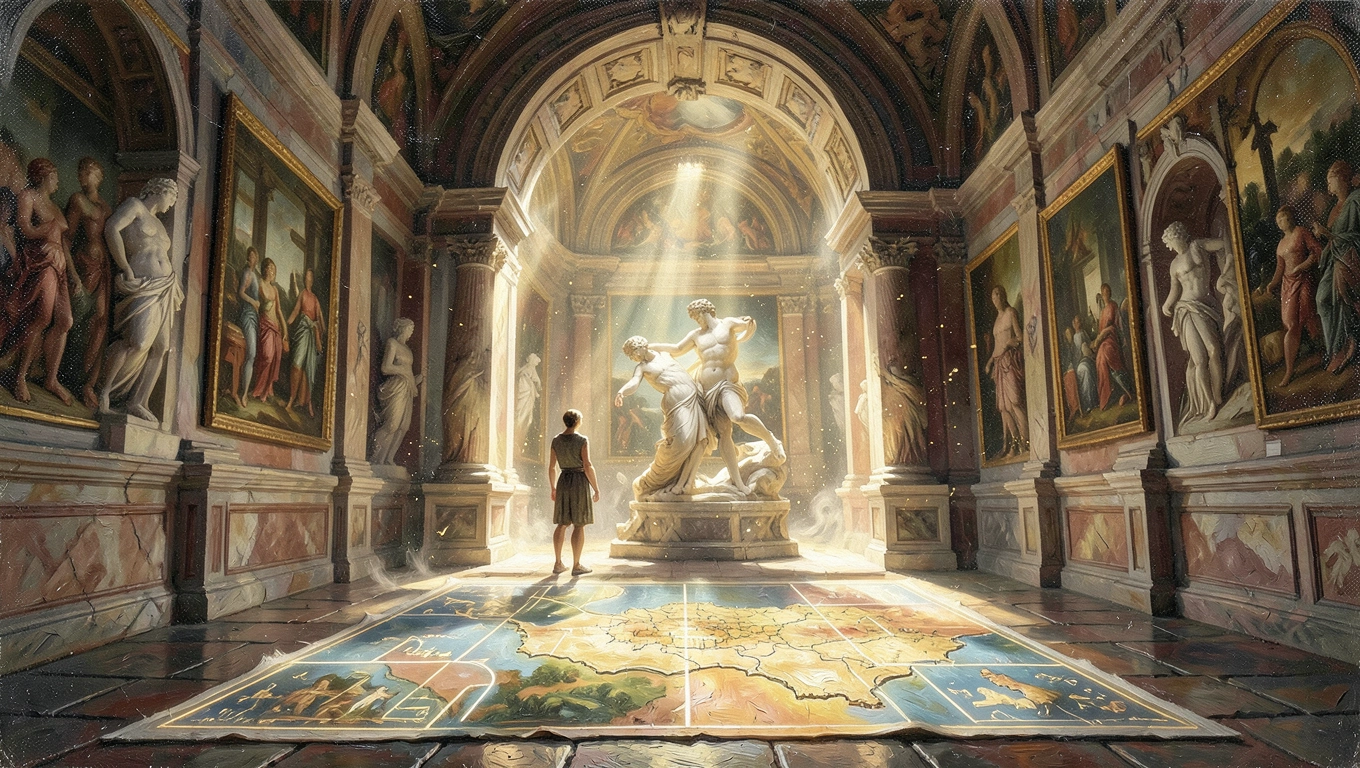
Restricting your gallery day to two major museums creates space for genuine engagement rather than superficial exposure. The Vatican Museums demand substantial time not because they’re inefficiently organized but because they contain centuries of collected treasures across multiple wings. The Raphael Rooms alone warrant at least 30 minutes if you actually examine the frescoes rather than photograph them. The Sistine Chapel, despite its fame, represents just one component of a sprawling complex that includes the Gallery of Maps, the Egyptian galleries, and the contemporary art collection.
Pairing a major museum with a smaller, focused collection produces better results than attempting three large venues. After spending a morning at the Vatican Museums, an afternoon at the Borghese Gallery provides contrast without overwhelming your capacity for appreciation. The Borghese’s compact scale and timed entry mean you’ll see Bernini sculptures and Caravaggio paintings when you’re still mentally fresh. Alternatively, combining the Capitoline Museums – established in 1471 as the world’s oldest public museum – with the nearby Palazzo Altemps creates a manageable day that traces Roman art from antiquity through the Renaissance without inducing stupor.
Strategic Timing and Energy Management
Start your gallery day when museums open, typically between 8:30 and 9:00 AM. Early arrival means smaller crowds, better light in naturally lit spaces, and your own peak mental energy for complex works. Schedule your most important museum first, while your attention remains sharpest. Save the second venue for mid-afternoon, building in time for a substantial lunch break that lets you rest and process what you’ve already seen.
Factor in walking time between locations. Rome’s museums spread across the historic center and beyond, and July or August heat makes the distances feel longer than maps suggest. The walk from the Vatican Museums to the Borghese Gallery takes roughly 30 minutes at a steady pace, longer if you’re already tired from three hours of viewing. Underground metro connections serve some museum pairs, but many locations require surface navigation through crowded streets. Allow at least 45 minutes of buffer time between venues.
Incorporate Church Visits for Free Masterpieces
Rome’s churches contain an astonishing concentration of significant artworks that require no admission fee and no advance booking. Multiple Caravaggio paintings hang in active parish churches where you can view them during regular visiting hours. The Church of San Luigi dei Francesi houses Caravaggio’s Matthew cycle in the Contarelli Chapel, three canvases that rank among his most important works. Santa Maria del Popolo contains two more Caravaggios in the Cerasi Chapel alongside Renaissance frescoes by Pinturicchio.
Building church visits into your gallery day provides several advantages beyond free admission. Churches offer climate-controlled respite from Rome’s heat, quiet spaces to rest between major museums, and often less crowded viewing conditions than famous galleries. The artistic quality rivals museum holdings – Michelangelo’s Moses resides in San Pietro in Vincoli, not a conventional museum. These works remain in their intended settings, surrounded by the architecture and religious context they were created for, which often enhances rather than diminishes the viewing experience.
Churches maintain varying visiting hours and restrictions during religious services, so timing matters. Most churches close for several hours in early afternoon, roughly from noon or 1:00 PM until 3:30 or 4:00 PM. Morning visits work best, either as preludes to your first major museum or as bridges between venues. Dress codes apply – covered shoulders and knees for both men and women – though many churches provide shawls or wraps for visitors in shorts or sleeveless tops. Photography policies differ by church, with some prohibiting flash while others ban cameras entirely.
Budget-Conscious Options
State and municipal museums in Rome offer free entry on the first Sunday of each month, though advance booking may still be necessary and tickets claim quickly even when they cost nothing. This policy covers significant venues including the Capitoline Museums, the National Roman Museum sites, and the Palazzo Altemps. The trade-off involves larger crowds, as both residents and budget travelers target these dates. Arrive early and expect fuller galleries than you’d encounter on a paid weekday.
Rome’s smaller museums and specialized collections charge modest admission fees compared to blockbuster venues. The Museum of Rome in Trastevere, the Keats-Shelley House, and various foundation museums provide focused experiences for under ten euros. These venues rarely require advance booking and seldom see the crushing crowds that plague the Vatican or Borghese, making them valuable additions to a gallery day when you want depth without chaos.
Create Thematic Focus Rather Than Chronological Coverage
Attempting to survey all of Roman art history in a single day produces superficial results and cognitive overload. Instead, organize your gallery visits around a theme, period, or artist that genuinely interests you. A day focused on Baroque art might combine the Borghese Gallery’s Bernini sculptures with Santa Maria della Vittoria’s Ecstasy of Saint Teresa, Palazzo Barberini’s ceiling frescoes, and the Church of Sant’Ignazio’s trompe-l’oeil dome. This approach creates coherent connections between works and deepens your understanding of a specific artistic moment.
Alternatively, structure your day around a particular artist whose work appears across multiple venues. A Caravaggio-focused itinerary could begin at the Borghese Gallery, continue to San Luigi dei Francesi and Santa Maria del Popolo, and conclude at Palazzo Barberini – following the artist’s development through his Roman period. This concentrated exposure reveals technical evolution, recurring motifs, and stylistic choices that scattered viewing obscures.
Ancient Rome enthusiasts should prioritize the Capitoline Museums’ sculpture galleries, the National Roman Museum’s multiple locations, and the Palazzo Altemps collection of Greek and Roman statuary. This combination provides comprehensive exposure to ancient art without the archaeological-site crowds of the Forum or Colosseum. The focused approach also allows time to read gallery labels and understand historical context rather than rushing through chronologically organized collections while retaining nothing.
Summary
A successful gallery day in Rome balances ambition with practical constraints. The city’s art riches exceed what any visitor can meaningfully absorb in one day, making selective focus essential. Advance booking for the Borghese Gallery and Vatican Museums prevents wasted hours in queues and ensures access to your highest-priority venues. Limiting yourself to two major museums plus strategically chosen church visits creates space for genuine engagement rather than exhausting coverage. Rome’s churches provide free access to masterpieces by Caravaggio, Michelangelo, and other major artists, filling gaps between formal museum visits while offering architectural beauty and climate-controlled rest. Thematic organization around a period, style, or artist produces more coherent understanding than attempting chronological surveys. The first Sunday free admission program opens budget-conscious options, though crowds increase correspondingly. Ultimately, the best gallery day prioritizes depth over breadth, allowing you to truly see and remember the works you encounter rather than accumulating a blur of images that fade within days.
FAQs
How early should I book Borghese Gallery tickets?
Book Borghese Gallery tickets as soon as your Rome dates are confirmed, ideally two to three months in advance. Tickets release several months ahead and sell out quickly during spring and fall. The gallery enforces strict timed entry with limited capacity, and last-minute availability rarely exists during peak travel seasons. Weekend slots disappear faster than weekday times.
Can I visit both the Vatican Museums and Borghese Gallery in one day?
Yes, visiting both venues in one day is feasible but requires careful planning. Book the Vatican Museums for opening time to avoid peak crowds, then allow three hours for viewing before departing. Schedule your Borghese Gallery entry for mid-afternoon, accounting for the 30-minute walk or public transit connection between locations. This combination works best as your only gallery activities for that day.
Which Rome churches have the most important artworks?
San Luigi dei Francesi and Santa Maria del Popolo contain multiple Caravaggio paintings and rank among the most significant. San Pietro in Vincoli houses Michelangelo’s Moses sculpture. Santa Maria sopra Minerva displays Michelangelo’s Risen Christ and contains works by Filippino Lippi. Sant’Agostino features another Caravaggio. The Basilica of San Clemente offers remarkable medieval frescoes alongside ancient Roman remains beneath the church floor.
Are audio guides worth using in Rome’s museums?
Audio guides enhance understanding significantly, particularly in venues like the Vatican Museums where the collection spans multiple cultures and time periods without intuitive organization. The Borghese Gallery audio guide provides essential context for understanding Bernini’s sculptures and the cardinal’s collecting strategy. Many museums now offer app-based guides you can download to your phone, eliminating equipment rental lines. Budget at least 20 minutes longer for your visit when using an audio guide.
What should I bring for a full day of museum visits in Rome?
Wear comfortable walking shoes with good support, as you’ll spend hours on marble and stone floors. Bring a refillable water bottle since museums permit sealed containers and Rome’s drinking fountains provide safe tap water. Pack a light sweater regardless of season, as air conditioning can be aggressive and some galleries remain cool year-round. Carry a small bag that meets museum security requirements – most venues prohibit backpacks larger than standard daypacks. Keep your phone charged for tickets and photography where permitted.